 Image 1 of 1
Thermal imaging can solve a surprising number of real-world problems that fall outside standard property scans, efficiency audits, and nuisance-animal work. These are the quiet, practical uses that matter to homeowners, hobby farmers, craftsmen, and small business owners who want clarity before they drill, build, repair, or maintain something important.
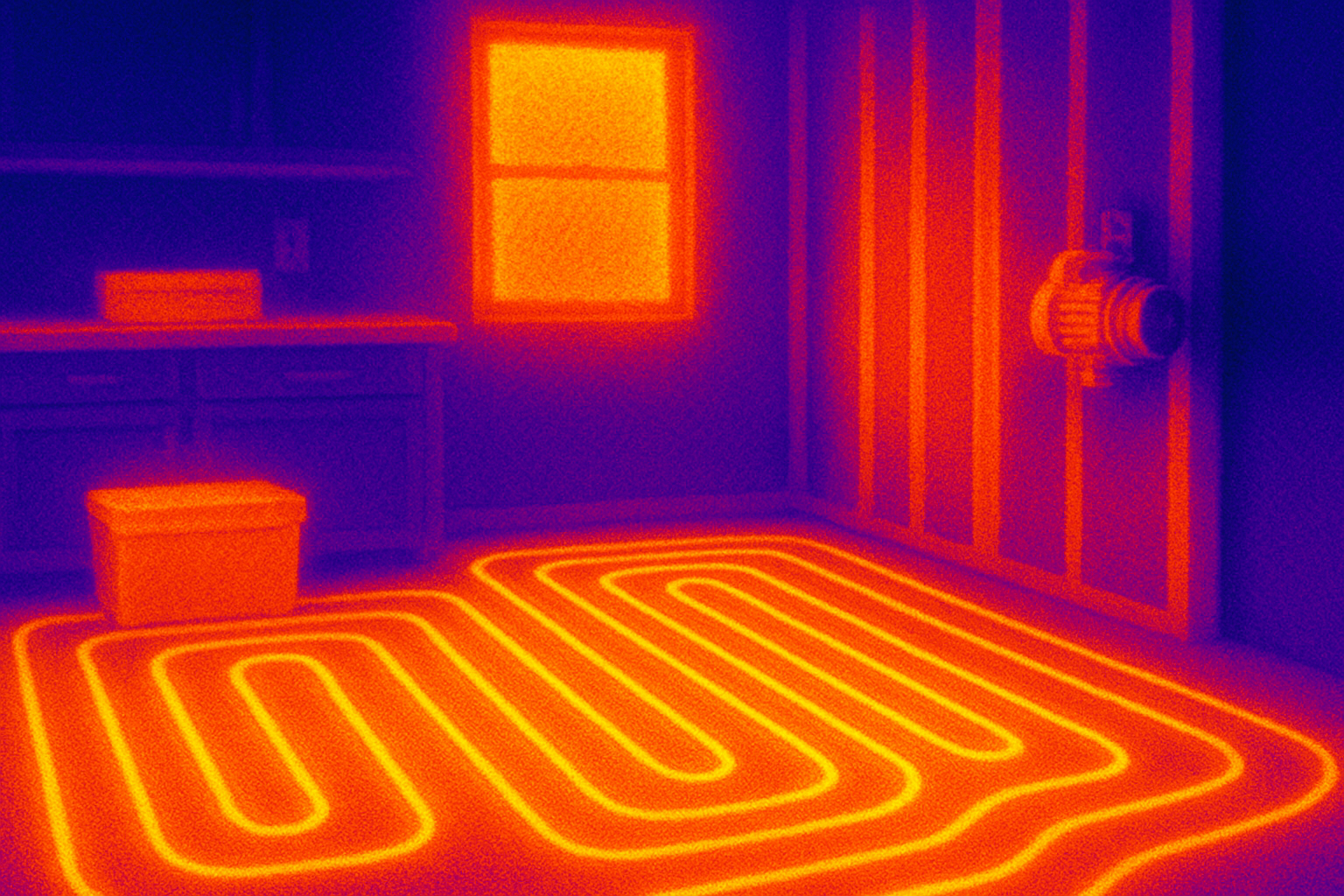
One of the most valuable applications is mapping radiant floor heating in concrete shops, garages, and barns. When the system is running, the thermal camera shows the warm paths of each loop and highlights any areas where heat flow is uneven. This is especially useful before drilling anchor holes or mounting equipment. A quick scan helps you avoid accidentally drilling through a heated water line, which can prevent a costly and stressful repair.
Thermal imaging can also reveal the approximate paths of active hot-water lines inside walls or under flooring. It cannot show depth, but it will show the warmed areas where hot water is moving, allowing work to be planned with fewer surprises during renovations or installations.
In small machine shops, home garages, and barns, thermals are an excellent way to identify overheating motors, failing bearings, or electrical components that are warming unevenly. The early warning this provides often prevents equipment failure long before it becomes visible or audible.
Woodworkers, restorers, and DIY builders can use thermal imaging to spot temperature differences in materials that sometimes signal moisture or uneven drying. While this does not diagnose structural problems on its own, it does help identify areas that deserve closer inspection.
For gardeners, homesteaders, and people who actively manage their land, surface temperature patterns can reveal locations where frost forms early, where cold air naturally pools, or where sections of greenhouses and high tunnels are warming unevenly. These subtle differences influence plant health, ventilation adjustments, and layout choices.
Thermals can also help anyone managing controlled environments, such as greenhouses, barns, equipment rooms, brewing spaces, or climate-sensitive storage. They highlight surfaces that warm or cool unevenly, making it easier to fine-tune airflow, insulation, or heating equipment.